Review: I See Your True Colors Embroidery Design
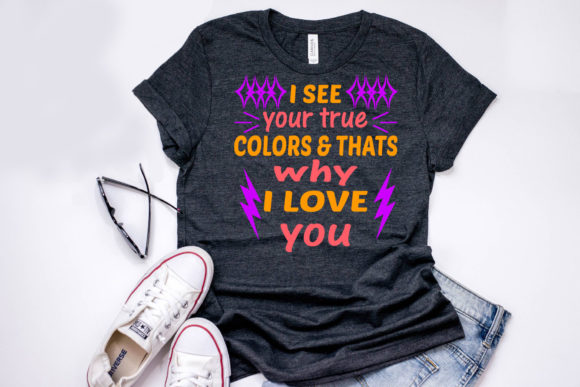
As a designer who has spent countless hours digitizing and stitching out files for clients, I have learned that not every graphic translates well to thread. When I first pulled up the Autism Quote Design, I See Your True Co, my immediate reaction was one of cautious optimism. The phrase "I see your true colors, that's why I love you" carries significant emotional weight, particularly within the autism awareness community. But sentiment alone does not make a viable embroidery product. The real question is whether the visual execution supports the message when translated from a digital screen to physical fabric.
First Impressions and Visual Personality
The design relies heavily on typography and color theory, which presents both an opportunity and a challenge for machine embroidery. In its raw form, provided as part of a ZIP file containing EPS, SVG, PNG, and DXF formats, the artwork is clearly intended for multi-purpose use, including scrapbooking and cutting machines. However, for us embroidery professionals, the focus must shift to how these lines behave under the needle.
The mood of the piece is warm, inclusive, and celebratory. It avoids clinical or sterile aesthetics, opting instead for a friendly, approachable vibe. This makes it an excellent candidate for custom apparel and personalized gifts. The layout appears balanced, but when evaluating any quote-based machine embroidery design, we must look past the pretty pixels. We need to consider legibility. If the font choices are too thin or the spacing too tight, the thread buildup can obscure the message. My initial assessment suggests that this design works best when scaled appropriately to allow each letter to breathe, ensuring the "true colors" mentioned in the text are represented by distinct, vibrant thread choices.
Real-World Application: The Tote Bag Test
To truly evaluate this asset, I imagined a specific real-life scenario: creating a line of supportive merchandise for a local neurodiversity support group. I pictured this design stitched onto a heavy canvas tote bag design. Canvas is forgiving; it holds stitches well and provides a neutral background that allows bright thread colors to pop.
In this context, the design shines. The quote serves as a conversation starter and a badge of allyship. For an Etsy seller or small shop product owner, this type of item has high perceived value. It is not just a bag; it is a statement. The versatility of the included files means you could also adapt the elements for a sweatshirt embroidery project. On a fleece or cotton blend hoodie, the soft texture complements the gentle message of the quote. However, because sweatshirts are often dark-colored, you would need to ensure your digitizing includes proper underlay stitches to prevent the fabric color from bleeding through the lighter threads.
Navigating Fabric and Hoop Constraints
While the design is versatile, it is not without its limitations. One must be careful when applying this to textured fabrics or stretchy materials. If you are attempting baby embroidery on a soft onesie, the stitch density becomes critical. Too dense, and the garment will pucker and become uncomfortable against sensitive skin. Too loose, and the edges of the letters may fray after washing.
For curved surfaces like caps or hats, this design requires careful placement. The phrase is relatively long, so fitting it into a standard cap hoop might require reducing the size to a point where legibility suffers. In such cases, I would recommend splitting the design or using it on the back panel of a trucker hat where there is more flat surface area. Additionally, when working with thin fabrics like silk or lightweight rayon, a high-quality cut-away stabilizer is non-negotiable. Without it, the tension from the stitches will distort the fabric, ruining the clean lines of the typography.
Technical Considerations for Stitching
Since the product description lists this under T-Shirt Designs and Graphics, it is important to note that these are primarily vector and raster image formats (EPS, SVG, PNG, DXF). They are not native embroidery files like PES or DST. This is a crucial distinction for craft business owners. You will need to digitize this design yourself or hire a digitizer to convert these graphics into a stitch file.
This step allows for customization but adds workload. When digitizing, pay close attention to the corners of the letters. Sharp angles in graphics often translate poorly to embroidery unless they are slightly rounded or reinforced with additional stitches. I recommend testing the design in black and white mockups first. If the design loses its impact without color, it relies too heavily on hue rather than shape. A strong embroidery project should hold its structural integrity even in monochrome.
Furthermore, consider the hoop size required. A full-sentence quote usually demands at least a 5x7 or 6x10 hoop. Ensure your machine can accommodate this before committing to the project. For smaller items like embroidered patch creations, you might need to isolate a portion of the design, such as just the heart or a shortened version of the phrase, to maintain clarity.
Commercial Viability and Brand Trust
For commercial embroidery applications, consistency is key. Customers buying handmade items expect a certain level of professionalism. A poorly stitched quote can look messy and amateurish, damaging brand trust. By taking the time to test this design on scrap fabric, adjusting tension, and selecting high-quality threads, you elevate the finished product from a simple craft to a boutique-quality item.
The emotional resonance of the "I see your true colors" message enhances buyer engagement. It is perfect for holiday embroidery gifts, awareness month promotions, or everyday wear that promotes inclusivity. When customers see a well-executed design, they associate that quality with your brand. This leads to repeat business and positive reviews, which are vital for any digital product seller or apparel decorator.
Final Verdict and Best Practices
The Autism Quote Design, I See Your True Co is a promising asset for designers willing to put in the technical legwork. It is not a plug-and-play solution if you lack digitizing skills, but for those who can convert SVG or EPS files into stitch data, it offers a meaningful and marketable motif.
- Test extensively: Always stitch out on the actual fabric you plan to sell.
- Check licensing: Confirm whether the included files allow for commercial use of the finished embroidered items.
- Mind the density: Adjust stitch counts for delicate fabrics to avoid puckering.
- Contrast is king: Ensure your thread colors stand out against the background fabric for maximum readability.
In conclusion, this design fits naturally into the repertoire of a thoughtful maker. It bridges the gap between digital art and tactile comfort, offering a way to wear support and love literally on your sleeve. With careful attention to stabilizer choice, thread selection, and hoop placement, this graphic can become a standout piece in any handmade product lineup.