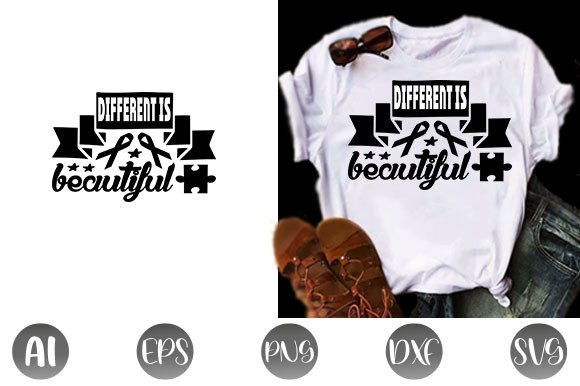
Reviewing Autism Quote Design: Different is Beautiful
As a designer who has spent years digitizing patterns and reviewing machine embroidery design files for real-world application, I approach every new asset with a critical eye. It is not enough for a graphic to look good on a screen; it must translate flawlessly into thread and fabric. Recently, I evaluated the Autism Quote Design, different is beautiful to determine its viability for commercial and personal projects. This review breaks down how this specific Graphics asset performs when moved from digital concept to tangible embroidery project.
First Impressions and Visual Mood
The immediate impact of the Autism Quote Design, different is beautiful is one of warmth and inclusivity. The typography and layout suggest a modern, clean aesthetic that avoids clutter, which is crucial for embroidery. When I first opened the files, I looked for balance. A quote-based design lives or dies by its legibility. If the letters are too thin or the spacing too tight, the needle will punch through the fabric in a way that creates holes rather than art. This design appears to have sufficient weight, suggesting it would hold up well under a standard satin stitch or a light fill stitch depending on the size.
The mood is uplifting without being overly decorative, making it versatile. It does not scream for attention but invites a closer look. For an Etsy seller or a small shop product creator, this subtlety is a strength. It allows the message to stand on its own merit, fitting seamlessly into a brand identity focused on awareness, acceptance, and neurodiversity.
Real-World Application: The Tote Bag Test
To truly understand the value of this digital embroidery file, I visualized it on a canvas tote bag. This is a common request for craft business owners, especially during awareness months or as everyday carry items. The rectangular nature of most tote panels provides an ideal canvas for horizontal quote designs.
In this scenario, the Autism Quote Design, different is beautiful would likely serve as the central focal point. Using a contrasting thread colors palette—perhaps a soft teal or vibrant purple against natural cotton—would enhance readability. The design’s structure suggests it would stitch cleanly on medium-weight fabrics. However, because tote bags undergo significant stress and washing, I would recommend using a cut-away stabilizer to prevent puckering over time. The result would be a durable, meaningful handmade product that resonates with buyers looking for purposeful accessories.
Apparel and Custom Gifts
Beyond totes, this design shines in custom apparel. Imagine it embroidered on the left chest of a hoodie or across the back of a sweatshirt embroidery project. For baby embroidery, such as on a onesie or a soft blanket, the scale must be adjusted carefully. The phrase "different is beautiful" carries profound weight for parents of neurodivergent children, making it a powerful personalized gift.
When applying this to T-Shirt Designs, particularly for commercial embroidery, one must consider the stretch of the knit fabric. A design with dense lettering can restrict the fabric's natural give. Therefore, checking the stitch density is vital. If the original file is heavy, reducing the density or converting certain elements to a running stitch outline can maintain the visual integrity while ensuring comfort. This adaptability makes it a strong candidate for boutique branding where comfort and message are equally important.
Technical Considerations for Embroiderers
While the aesthetic appeal is clear, the technical execution requires attention to detail. The provided file formats—EPS, SVG, PNG, and DXF—indicate that this is primarily a vector and raster graphic package intended for cutting machines and printing, rather than a native embroidery file format like PES or DST. This is a critical distinction for embroidery designers.
If you are using this as a base for digitizing, you have full control. You can trace the SVG in your digitizing software to create custom paths. This allows you to decide whether to use an applique design technique, where fabric is layered under the text, or traditional stitching. If you are not digitizing yourself, you must ensure you have the rights and skills to convert these design assets into a stitch file. Always test the design on scrap fabric first. Check how the curves of the letters handle turns. Sharp corners in vector graphics often need smoothing in embroidery to prevent thread breaks.
Consider the hoop size required. A long quote may need a 5x7 or 6x10 hoop. Ensure your machine can accommodate this. Additionally, when working on dark fabrics, the contrast becomes even more important. A light thread on a navy sweatshirt will pop, but you must ensure the underlying fabric does not show through gaps in the stitching. Using a matching underlay or a solid fill can mitigate this issue.
Navigating Challenges and Fabric Choices
Not every fabric is a friend to quote-based designs. Thin or slippery materials like silk or rayon require extra care. The Autism Quote Design, different is beautiful might struggle on these surfaces if the stitch count is high, leading to gathering or distortion. In such cases, using a water-soluble topping can help keep the stitches on the surface of the fabric texture rather than sinking in.
Curved surfaces, such as caps, present another challenge. The design must be warped or adjusted to fit the curve of the cap front. If the text is too long, it may wrap around the sides awkwardly. For embroidered patch creation, however, this design could excel. Patches allow for heavier stabilization and denser stitching, resulting in a crisp, professional finish that can be ironed or sewn onto various garments later. This adds versatility for holiday embroidery gifts or uniform branding.
Commercial Value and Brand Consistency
For digital product sellers and creative entrepreneurs, the versatility of this design is a key selling point. It fits naturally into niches focused on advocacy, education, and family. When used in printable mockup presentations, it looks clean and professional. However, transparency with customers is essential. If you are selling finished items, highlight the quality of the stitching and the meaning behind the quote. If you are selling the digital file for others to use, clarify the license terms. Since the package includes DXF and SVG, many buyers may assume it is ready for cutting machines like Cricut or Silhouette, which is true, but embroidery users need to know they may need to digitize it themselves unless a stitch file is explicitly included.
The visual appeal of this design contributes directly to customer trust. A well-executed embroidery job signals professionalism. When a buyer sees clean edges, consistent tension, and thoughtful color choices, they perceive higher value. This design, with its positive message, encourages engagement. It is not just a product; it is a statement. This emotional connection can drive sales for small business merchandise and increase buyer retention.
Final Verdict for Makers
The Autism Quote Design, different is beautiful is a strong addition to any designer’s library, provided you understand its format. It is best suited for those who have digitizing capabilities or who plan to use it for vinyl cutting and printing. For embroiderers, it serves as an excellent template for creating custom stitch files. Its clean lines and meaningful message make it ideal for tote bag design, custom apparel, and heartfelt gifts.
Remember to always check the specific license terms before selling finished products. Test your stitches, choose your stabilizer wisely, and let the message shine through your craftsmanship. With careful execution, this design can become a staple in your portfolio of meaningful, high-quality finished product offerings.